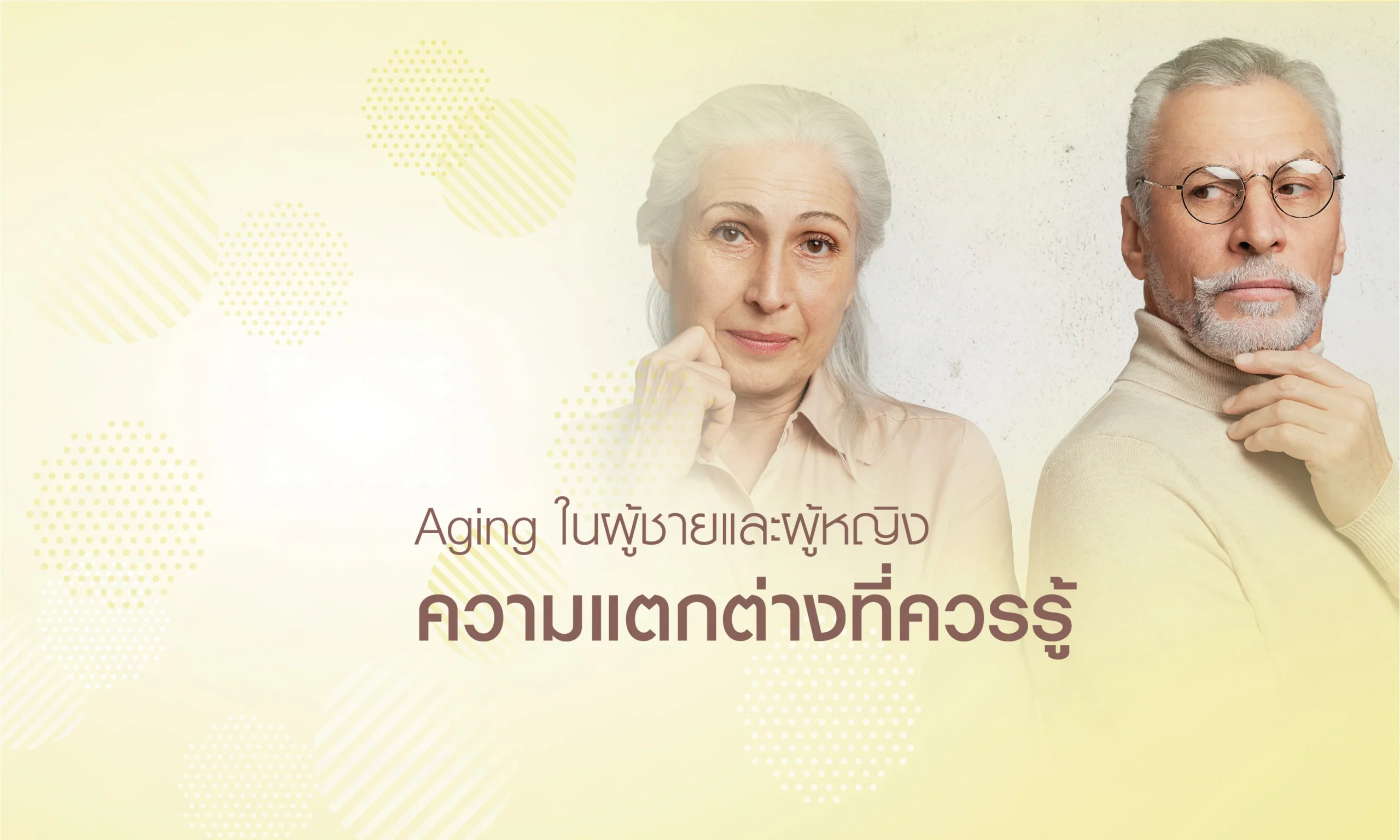
Aging is something that cannot be avoided and everyone has to face it at different times according to their age. But importantly, the aging process in men and women is clearly different, whether it is physical, skin or hormonal changes, which affect different ways to take care of health and slow down aging.
In this article, we will walk you through the differences between aging in men and women, as well as how to care for yourself in a way that’s right for your gender.
1. Hormonal changes
In women
One of the key differences in aging in women is the decline in the hormone estrogen , which typically occurs during menopause or the onset of middle age (typically between the ages of 45 and 55). Estrogen plays a role in helping to maintain skin elasticity and firmness. When it declines, the skin loses its elasticity and is more susceptible to wrinkles. It also has an impact on bones and joints, potentially putting postmenopausal women at greater risk of developing osteoporosis.
In men
In men, the aging process is often associated with a decline in the hormone testosterone, which begins to decline slowly around the age of 30. Men typically experience a decline in this hormone at a rate of about 1-2% per year. Testosterone plays a key role in regulating muscle mass and strength, so a decline in this hormone can lead to a man losing muscle mass and strength, especially as he ages.
2. Physical changes
In women
Women often experience changes in their body shape as they enter middle age, such as weight gain around the waist and hips. These changes are often caused by a decrease in estrogen and a lack of proper exercise. A decrease in muscle and bone mass is also seen in women after menopause.
In men
Although men don’t experience the same drastic body changes as women, a decline in testosterone can cause men to lose muscle mass and strength as they age. There’s also a risk that men will develop a “big belly, ” or the accumulation of fat around their bellies, which often accompanies a loss of muscle mass.
3. Changes in skin complexion
In women
Women’s skin often shows significant differences when they enter the aging process because estrogen affects the skin’s moisture and elasticity. When estrogen levels decrease, the skin begins to lose moisture and elasticity, causing wrinkles and sagging skin. In addition, there is the problem of dry skin and the skin’s ability to recover from injuries is reduced.
In men
Although men generally have thicker skin than women, as we age, the collagen in our skin continues to decline, which can cause the skin to lose its elasticity and develop wrinkles. However, men tend to have more wrinkles and changes that tend to occur around the eyes and forehead than women.
4. Risk of various diseases
In women
As women enter middle age and menopause, they are at higher risk of osteoporosis and heart disease, due to a decrease in the hormone estrogen, which plays a role in protecting bones and the blood vessel system. This decrease in hormones makes women’s bones more susceptible to fractures.
In men
As men age, testosterone levels decline, which leads to a decrease in muscle and bone mass. Men are more at risk of developing bone and joint problems. Men are also at increased risk of developing cardiovascular disease and metabolic diseases such as diabetes as they age.
5. How to take care of yourself according to your gender
For women
- Take care of your skin health by using products that help restore moisture and collagen, such as nourishing creams that contain vitamins C and E. Taking care of your skin health is very important, especially choosing products that help restore moisture and collagen, such as nourishing creams that contain vitamins C and E , both of which have the ability to help adjust the skin condition to be bright, reduce wrinkles, and help build collagen in the skin to be elastic and strong. In addition,
- Regular exercise is also important in building muscle mass and increasing body strength. Exercise helps prevent osteoporosis and helps the body to be firm, which is important as we age. It also helps reduce the risk of chronic diseases such as diabetes and heart disease. Eating foods rich in calcium and vitamin D nourishes bones and promotes bone and tooth strength, along with exercise to make health care effective.
- Eating foods high in omega-3 fatty acids and protein is an important part of building muscle mass and maintaining heart health. Omega-3 fatty acids play a role in reducing inflammation in the body and aiding brain function, while protein helps repair and build muscle. In addition, taking care of your skin by using products that help reduce wrinkles is something that men should give importance to, such as using creams that contain retinol or coenzyme Q10, which help reduce wrinkles and stimulate collagen production in the skin, making the skin look younger and brighter.
For men
- Focus on exercise to increase muscle mass and maintain strength.
- Eat foods high in omega-3 fatty acids and protein to help build muscle mass and maintain heart health.
- Take care of your skin by using products that help reduce wrinkles, such as creams containing retinol or coenzyme Q10.
summarize
Aging in men and women is different in both physical and health aspects. The changes that occur in each gender affect self-care at each age. Therefore, understanding and dealing with aging effectively is important and can be done by choosing health care that is appropriate for each person’s gender and age, so that aging is slow and has a better quality of life at every age.